Contents 9 sections · ~8 min read
Liposuction is a surgical procedure that removes fat cells from specific areas through a thin suction tube, to reshape areas where fat remains even after diet and exercise. Before you decide, it helps to know the downsides, the recovery time and how it differs from non-surgical fat reduction. This article brings it all together in one place.
In short:
- Liposuction is not a weight-loss method. It reshapes specific areas and suits people who are already close to their goal weight.
- It is surgery, so it carries surgical risks and the risks of local or general anaesthesia.
- Most people return to light activity within 1–2 weeks and wear a compression garment for 4–6 weeks.
- Results start to show at around 6 weeks, and the full shape settles in 3–6 months.
- Fat cells that are removed do not come back, but if you gain a lot of weight, the remaining fat cells can grow.
What is liposuction and how does it work?
Before removing fat, the surgeon injects a salt-water solution containing a local anaesthetic and a medicine that narrows the blood vessels into the fat layer. This is called the tumescent technique. It reduces blood loss and helps the fat to be removed more evenly. A thin suction tube then removes the fat through small incisions. Other methods use ultrasound, laser or a vibrating (power-assisted) cannula, and the doctor chooses the method that suits each person.
The procedure can be done under local anaesthetic with the tumescent technique or under general anaesthesia, depending on the extent of the procedure and the anaesthetist’s advice. At Zeniq Holistic Clinic, liposuction on one area takes about 1–2 hours, and most patients return to their accommodation on the same day.
The downsides and limitations of liposuction
1. It is surgery and carries surgical risks
All surgery carries risks, such as bleeding, infection and side effects from local or general anaesthesia. The risk rises when a larger area is treated or several procedures are done in one operation, so the doctor assesses your health and checks your blood before surgery.
2. Swelling, bruising and soreness at first
After surgery you will have pain, swelling and bruising. The doctor may prescribe medicine to ease these, and you will wear a compression garment for 4–6 weeks to reduce swelling and help your new shape settle. Most swelling and bruising goes down within 4–6 weeks.
3. The skin may look uneven or loose
Some people see wavy or bumpy skin, or a difference between the two sides. If the skin is thin or has little elasticity, the treated area may look loose. Some cases need a further operation or removal of excess skin, which is why the doctor always assesses skin elasticity before surgery.
4. Numbness or changes in skin sensation
Numbness in the treated area can happen. It is usually temporary, but in some people it can last a long time.
5. It does not treat cellulite or stretch marks
Liposuction reduces fat, but it does not fix dimpled cellulite or stretch marks.
6. It is not a weight-loss method
Liposuction reshapes the body; it is not overall weight loss. If you want to lose weight, you still need a healthy diet and exercise.
7. Rare but serious complications
These include fluid build-up under the skin (seroma), blood clots in the veins, fat entering the bloodstream (fat embolism), injury to internal organs and local anaesthetic toxicity. Although they are uncommon, they are the reason liposuction must be done by a doctor in a properly equipped operating theatre.
8. How long results last depends on your weight
Fat cells that are removed do not grow back. But if you gain a lot of weight afterwards, the remaining fat cells, in both treated and untreated areas, can grow. Your new shape lasts long-term when your weight stays stable.
How long is liposuction recovery?
Recovery varies from person to person. This table shows the typical timeline for most patients at Zeniq Holistic Clinic.
| When | What may happen |
|---|---|
| Day of surgery | Liposuction on one area takes about 1–2 hours. A compression garment is fitted straight after surgery, and most patients return to their accommodation the same day. |
| Within 48 hours | Lymphatic drainage massage begins to help reduce swelling. |
| 1–2 weeks | Return to light activities. |
| 2–3 weeks | Return to normal daily life. |
| 4–6 weeks | Most swelling and bruising has gone down. Keep wearing the compression garment for the full period, and wait for the doctor’s go-ahead before strenuous exercise. |
| 6 weeks | The change in shape becomes clearer, and the first follow-up visit takes place. |
| 3–6 months | Swelling has fully settled and the skin has adjusted to the new shape, so you see the full result (another follow-up at 3 months). |
Before you go home, you receive a self-care guide covering wound care, the compression garment schedule, activity limits and the warning signs that mean you should see the doctor straight away.
Liposuction vs fat freezing: what is the difference?
Fat freezing (cryolipolysis) is a non-surgical method that uses cold to destroy fat cells, which the body then clears gradually. Liposuction is surgery that removes fat directly. Both are used for localised fat, and neither is a weight-loss method.
| Topic | Liposuction | Fat freezing |
|---|---|---|
| Method | Surgery; a suction tube removes the fat | No surgery; cold destroys fat cells |
| Anaesthesia | Local anaesthetic with the tumescent technique, or general anaesthesia | No sedation needed |
| Fat reduction | Fat is removed directly; the amount depends on the doctor’s plan and safety | Studies show an average reduction of about 15–28% of the fat in the treated area per session |
| Number of sessions | Planned individually by the doctor | One session may be enough; some people need more, at least 6–8 weeks apart |
| Recovery | Light activity in 1–2 weeks; normal daily life in 2–3 weeks | Most people return to normal activities straight away |
| When results show | From about 6 weeks; full result in 3–6 months | From about 3 weeks; clearer at around 2 months; full result in 3–6 months |
| Side effects to know | Surgical risks, swelling, bruising, numbness, uneven skin | Temporary pain, redness, swelling, bruising or numbness. A rare effect is the treated fat becoming thicker (PAH), which does not go away on its own and may need surgery |
Which one should you choose?
Which method suits you depends on the amount of fat, your skin condition and your health. Have a doctor check first that the area is really fat, not muscle or loose skin. Book a free doctor consultation before you decide.
Who is liposuction suitable for?
- People at or near their goal weight who still have localised fat that does not shift with diet and exercise, such as on the abdomen, waist, upper arms or thighs
- Mothers after childbirth whose weight has stabilised but who still have fat on the abdomen, hips or thighs
- People who have lost a lot of weight, through diet or weight-loss surgery, and want to treat the fat that remains
- People with uneven fat between the left and right sides
- People healthy enough for surgery
Talk to the doctor in detail first if you
- Want overall weight loss or have obesity
- Have a condition that makes surgery riskier, such as blood flow problems, coronary artery disease, diabetes or a weakened immune system
- Have very loose or less elastic skin in that area
Which areas can be treated?
Almost any area with localised fat, including the abdomen and flanks, inner and outer thighs, upper arms, back and bra-line fat, the male chest with enlarged breast tissue (gynaecomastia), knees, calves and hips. Several areas can be treated in one operation if the doctor finds it suitable.
For some areas, such as the calves, a larger size often comes from muscle rather than fat, so the doctor first checks how much fat there really is to remove.
How can you reduce the risks?
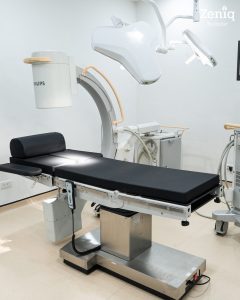
- Have it done in a properly equipped operating theatre with a team to manage anaesthesia and monitor you after surgery
- Give your full health history, including any previous procedures
- Follow your aftercare guide: wear the compression garment as instructed and avoid strenuous exercise until the doctor says you can
- Know the warning signs listed in your self-care guide that mean you should see the doctor straight away
Frequently asked questions
Does liposuction hurt?
The procedure uses local anaesthetic with the tumescent technique, or general anaesthesia. Afterwards you will feel sore and swollen at first, and the doctor may prescribe medicine to ease this.
Will I lose weight after liposuction?
Liposuction is not a weight-loss method. What changes is the size and shape of the treated area. If you want to lose weight, you still need a healthy diet and exercise.
Will the fat come back?
Fat cells that are removed do not come back. But if you gain a lot of weight, the remaining fat cells can grow in both treated and untreated areas, so keeping your weight stable matters.
Can several areas be treated at once?
Yes, if the doctor finds it suitable, based on how much fat needs to be removed and your overall health. The larger the area treated, the higher the risk.
How long do I need to wear the compression garment?
From straight after surgery, for about 4–6 weeks, following the schedule the doctor gives you.
How do I prepare before surgery?
Start by sending full-body photos from the front, side and back, the areas you want to treat, your height, weight, health history and any previous procedures, so the medical team can make an initial assessment. The surgeon then examines you at the clinic, marks the areas to be treated and checks your blood before your surgery date is set.
Summary
Liposuction reshapes specific areas; it is not weight loss. Its main downsides are that it is surgery, with recovery time and risks. Your new shape lasts long-term when your weight stays stable.
Results vary from person to person. A consultation is recommended first.
See the programme details at Liposuction at Zeniq Holistic Clinic, led by Dr. Chidpong Thongkum, or book a free doctor consultation before you decide.
Sources: Mayo Clinic – Liposuction · American Society of Plastic Surgeons – Liposuction safety · Cleveland Clinic – Fat Freezing (Cryolipolysis) · U.S. FDA – Non-Invasive Body Contouring Technologies · Ramathibodi Hospital, Rama Channel (Thai)